


 Caustic Soda (Sodium Hydroxide)
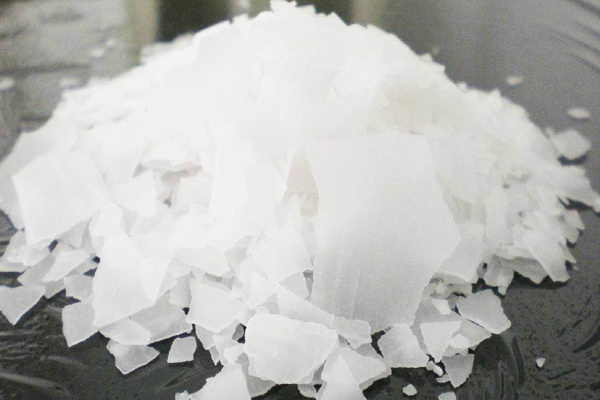
Caustic soda (sodium hydroxide) is a white crystalline product in flake or granular form. The main indicator is the mass fraction of NaOH: 98–99.5% (for solid form).
It is used as a pH regulator, precipitant, saponification catalyst, and disinfecting agent.
It has extremely high hygroscopicity and a strong alkaline reaction (pH 14 in concentrated solutions).
Caustic soda is used for cleaning drilling pipes, adjusting the alkalinity of drilling fluids, as well as in oil refining, the pulp and paper industry, and the production of detergents.
Application in the Oil and Gas Industry (Drilling and Oil Refining)
In the oil extraction, oilfield, and gas industries, caustic soda is used to maintain the alkalinity of drilling fluids, neutralize acid gases (H₂S, CO₂), as a reagent for removing scale from heat exchangers, and for flushing oilfield equipment. The substance has a high dissolving capacity for organic and inorganic contaminants, the ability to bind heavy metal ions, and is effective in the desulfurization of petroleum products. The use of caustic soda helps prevent equipment corrosion caused by acidic components and treat wastewater to remove petroleum products and suspended particles.
Oil Refining and Crude Oil Treatment
Technical caustic soda is an effective reagent for the alkaline washing of hydrocarbon fractions to remove mercaptans, hydrogen sulfide, and naphthenic acids. Its main advantage is its ability to extract acidic components, forming easily separable aqueous solutions (neutralized salts). Furthermore, the presence of caustic soda in Merox (demercaptanization) processes and amine gas treatment ensures a high degree of purification of commercial petroleum products and compliance with environmental regulations regarding sulfur content.
Other Applications
Caustic soda is used:
In the pulp and paper industry — for pulping, de-inking of wastepaper, and cardboard production;
In the production of detergents — as a base for soap making and a component of cleaning powders and gels;
In the chemical industry — for the synthesis of organic and inorganic compounds (phenolates, zeolites, sodium hypochlorite);
In metallurgy — for removing scale from metals and neutralizing acidic pickling baths;
In wastewater treatment — for precipitating heavy metals (copper, zinc, nickel) and adjusting pH before biological treatment;
In the food industry (E524) — for washing vegetables and fruits, caramel production, and peeling tomatoes and root vegetables;
In construction — as an additive that accelerates the hardening of silicate materials.
Caustic soda (sodium hydroxide, NaOH, lye) is a basic chemical reagent with the highest alkaline activity, which plays a key role in dozens of industrial processes and is an indispensable component in the preparation of drilling fluids, hydrocarbon purification, and water treatment.

